Renovation
Architecture · Trades · Fabrication
Designing and building two homes by hand — a 100-year-old cabin turned cottage, and our main house, taken down to the studs and rebuilt toward passive-house standards in Japandi style.
The Cottage
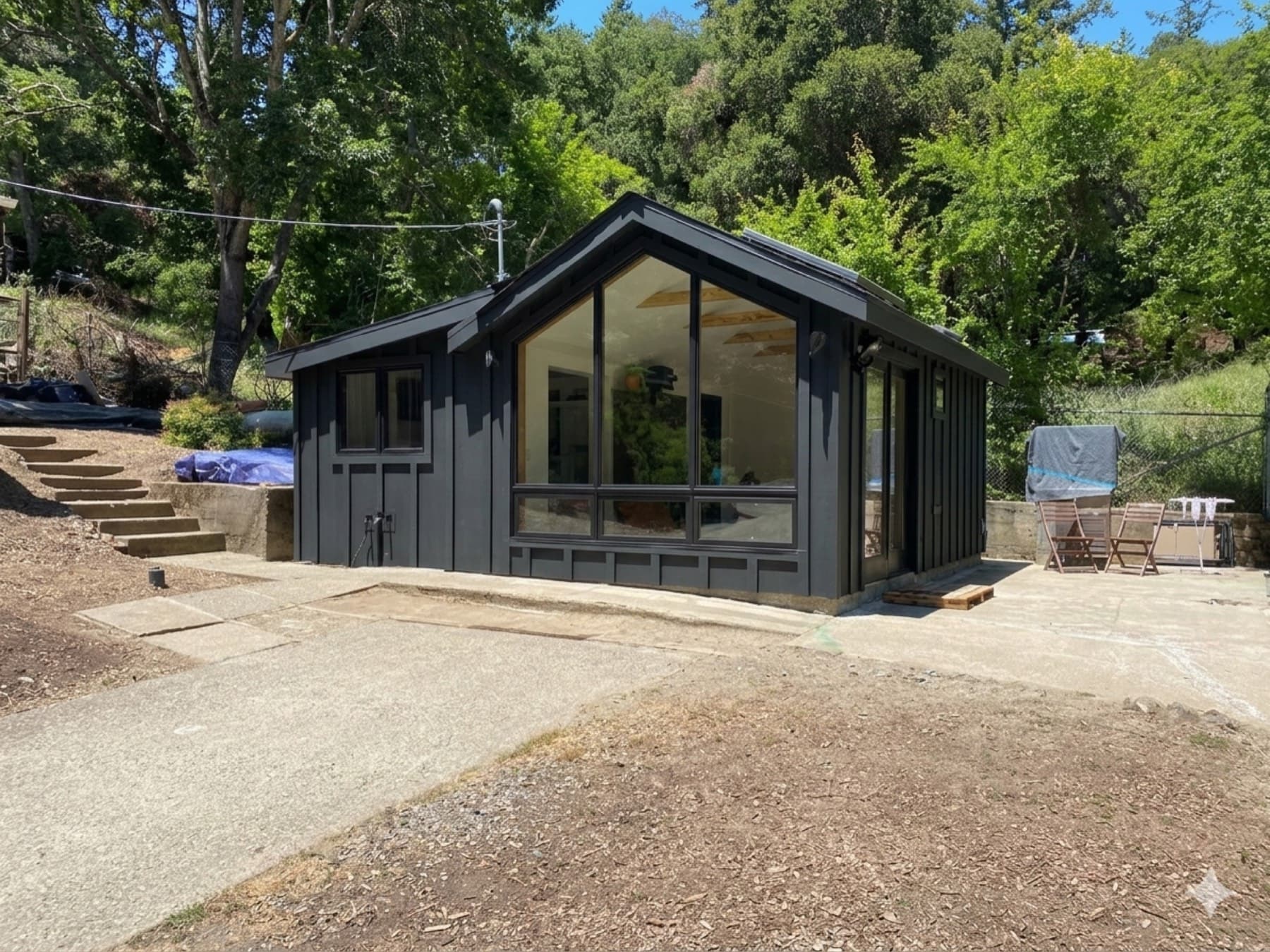
First I rebuilt our cottage — a 100-year-old loggers' cabin that had been a chicken shed, then a garage, before becoming a cottage. The work included full rewiring, full re-plumbing, foundation repairs, poured concrete floors, new exterior walls, a new bathroom, a skylight, a new roof, and HVAC install.
The whole structure is reinforced for earthquake protection and built with Class A fire-resistant materials through and through — from drywall to studs to insulation, house wrap, and cement siding.
The Main House
I'm currently renovating our main house, which includes everything the cottage did plus a five-zone HVAC system, a small addition, an engineered conditioned crawlspace, and an attempt to build toward passive-house standard compliance — serious building science for moisture management in a coastal California microclimate.
Japandi
Both interiors follow Japandi principles — wabi-sabi's embrace of imperfect natural surfaces, Scandinavian warmth, and intentional emptiness. Every surface you see, touch, and lean against is a natural material: clay walls, indirect lighting, natural wood. Nothing painted, nothing tiled, and most of the hardware hidden.
Why It Matters
This is hardware and fabrication at the scale of buildings — electrical, HVAC, structural engineering, passive-house standards, building science. The same pattern as every other project: learn the domain, then design and build it.